Pages

Monday, July 20, 2009

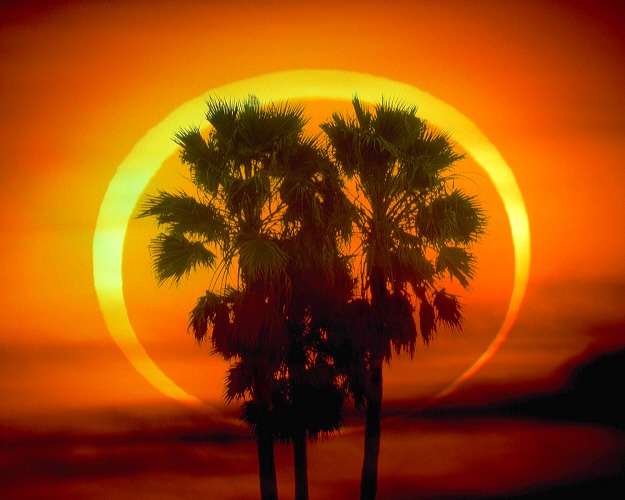
sun eclipse 2009

china-sun-eclipse-2009

Total Solar Eclipse 2009 photos , live , pictures , path

The path of totality At sunrise on July 22, 2009, (the evening of July 21 PDT), the moon’s umbra—the cone-shaped part of the moon’s shadow—will fall on India’s Gulf of Khambhat. The shadow will sweep across Asia and the South Pacific before leaving the earth near the Marshall Islands about 3½ hours later. The path of totality will cover a distance of approximately 9,500 miles (15,200 km). The maximum duration of totality is an exceptionally long 6 minutes and 39 seconds, which will come while the shadow is over the Pacific.

China Total Eclipse 22 July 2009 , photo Live show. TV Online watch. free

The Exploratorium’s eclipse expedition team has chased its fair share of total solar eclipses—seven so far—Webcasting these magnificent events to people around the world. While we won’t be traveling to this year’s eclipse, we plan to cover the total solar eclipse in July 2010. For this year, we’re providing links to other eclipse Web sites, and we’ll direct you to live Webcasts or broadcasts of the eclipse. We'll keep adding information, so check back here as the date approaches. On this site, you can watch archived Webcasts of previous eclipses, learn how to view an eclipse, read feature stories about eclipses, and much more!

China Total Eclipse 22 July 2009 , photo

Wednesday, July 15, 2009

what is lunar eclipse

what is lunar eclipse?

Complete Eclipse Coverage

solar eclipse myth

In ancient China, the solar and lunar eclipses were regarded as heavenly signs that foretell the future of the Emperor; predicting eclipses were of high importance for the state. Over four millenniums ago, two Chinese astrologers were murdered as they failed to predict a solar eclipse.

The ancient Chinese believed that solar eclipses occur when a legendary celestial dragon devours the Sun. They also believed that this dragon attacks the Moon during lunar eclipses. In the Chinese language, the term for eclipse was "chih" which also means "to eat". One ancient Chinese solar eclipse record describes a solar eclipse as "the Sun has been eaten".

Read More here | Astronomy news

Monday, July 13, 2009

china solar eclipse 2009

china solar eclipse 2009

china solar eclipse 2009 tour

Wednesday, 2009 July 22, a total eclipse of the Sun is visible from within a narrow corridor that traverses half of Earth

Saturday, March 28, 2009

Station Spacewalkers Install Experiments

Station Spacewalk

Station Spacewalkers Install Experiments, Probe

The Exposing Specimens of Organic and Biological Materials to Open Space (Expose-R) experiment was installed on the universal science platform mounted to the exterior of the Zvezda Service Module.

The spacewalkers also removed straps, or tape, from the area of the docking target on the Pirs airlock and docking compartment. The tape was removed to ensure it does not get in the way during the arrival of visiting Soyuz or Progress spacecraft. Fincke and Lonchakov later took photos of the exterior of the Russian portion of the station to document its condition after a decade of operation in the harsh environment of space. The photos will be used to assess the condition of the outer surfaces and structural elements of the station, including active components such as thrusters and vents.

Station Spacewalk nasa

The spacewalkers also removed straps, or tape, from the area of the docking target on the Pirs airlock and docking compartment. The tape was removed to ensure it does not get in the way during the arrival of visiting Soyuz or Progress spacecraft.

astronomy brief news

Monday, March 9, 2009

Kepler Launch

Kepler Launch

Kepler Launch

Astronomy & Space Headlines - Kepler Launch, Next Shuttle Launch, Costs Increase

The Kepler spacecraft and its Delta II rocket have been cleared to launch into space late Friday night following a thorough review by launch managers Monday.

Liftoff is scheduled for 10:49 p.m. EST. The Launch Services Program was joined by officials and engineers from the United Launch Alliance, the Kepler program and others to examine all aspects of the observatory and the launcher.

Kepler is a spaceborne telescope designed to search the nearby region of our galaxy for Earth-size planets orbiting in the habitable zone of stars like our sun. The habitable zone is the region around a star where temperatures permit water to be liquid on a planet's surface.

end

Thursday, March 5, 2009

Basic Astronomy News

Easier - Astronomy is the study of things found in space such as the sun, planets, moons, and stars.
Advanced -Astronomy , one of the oldest sciences, is the study of celestial bodies such as planets, stars, and other objects in space. Astronomers locate objects in the daytime or nighttime skies and measure their magnitudes and motions, searching to find what they are made of and how they create their light.

An astronomer is a scientist who studies celestial bodies such as planets, stars, and galaxies. Historically, astronomy was more concerned with the classification and description of phenomena in the sky, while astrophysics attempted to explain these phenomena and the differences between them using physical laws. Today, that distinction has mostly disappeared. Professional astronomers are highly educated individuals who typically have a PhD in physics or astronomy and are employed by research institutions or universities. They spend the majority of their time working on research, although they quite often have other duties such as teaching, building instruments, or aiding in the operation of an observatory.

Solar astronomy : Main article: Sun At a distance of about eight light-minutes, the most frequently studied star is the Sun, a typical main-sequence dwarf star of stellar class G2 V, and about 4.6 Gyr in age. The Sun is not considered a variable star, but it does undergo periodic changes in activity known as the sunspot cycle. This is an 11-year fluctuation in sunspot numbers. Sunspots are regions of lower-than- average temperatures that are associated with intense magnetic activity. Astronomy brief news.